
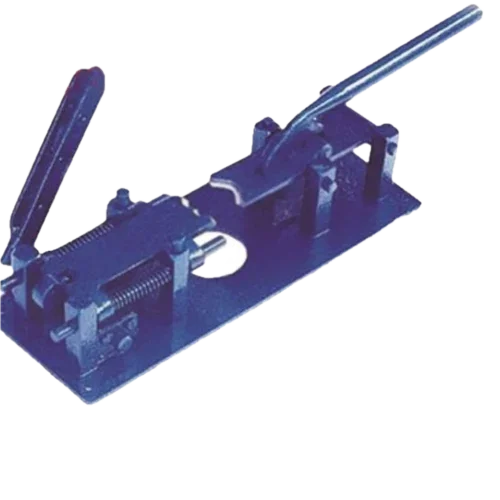
Bench-mounted. One nut at a time.

The process of extracting cashew is a labour-intensive and hazardous process. Despite advancements in technology, a significant portion of this process still relies on manual labour. How might we enable workers to safely handle and process cashews without compromising their productivity?
 AI Generated
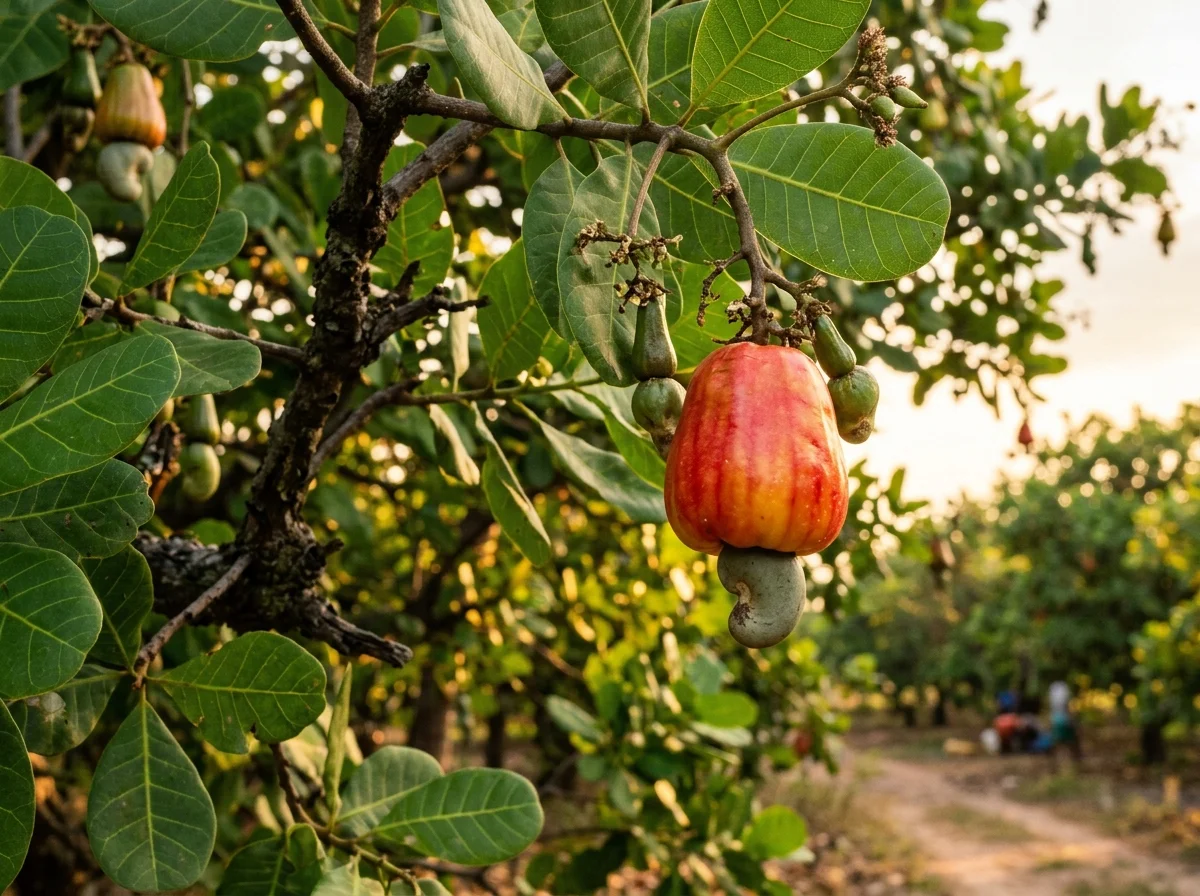
Cashew trees flower in late winter. As the juicy cashew apple develops, the true seed grows externally at its base encased in a tough, hazardous double shell.
 AI Generated
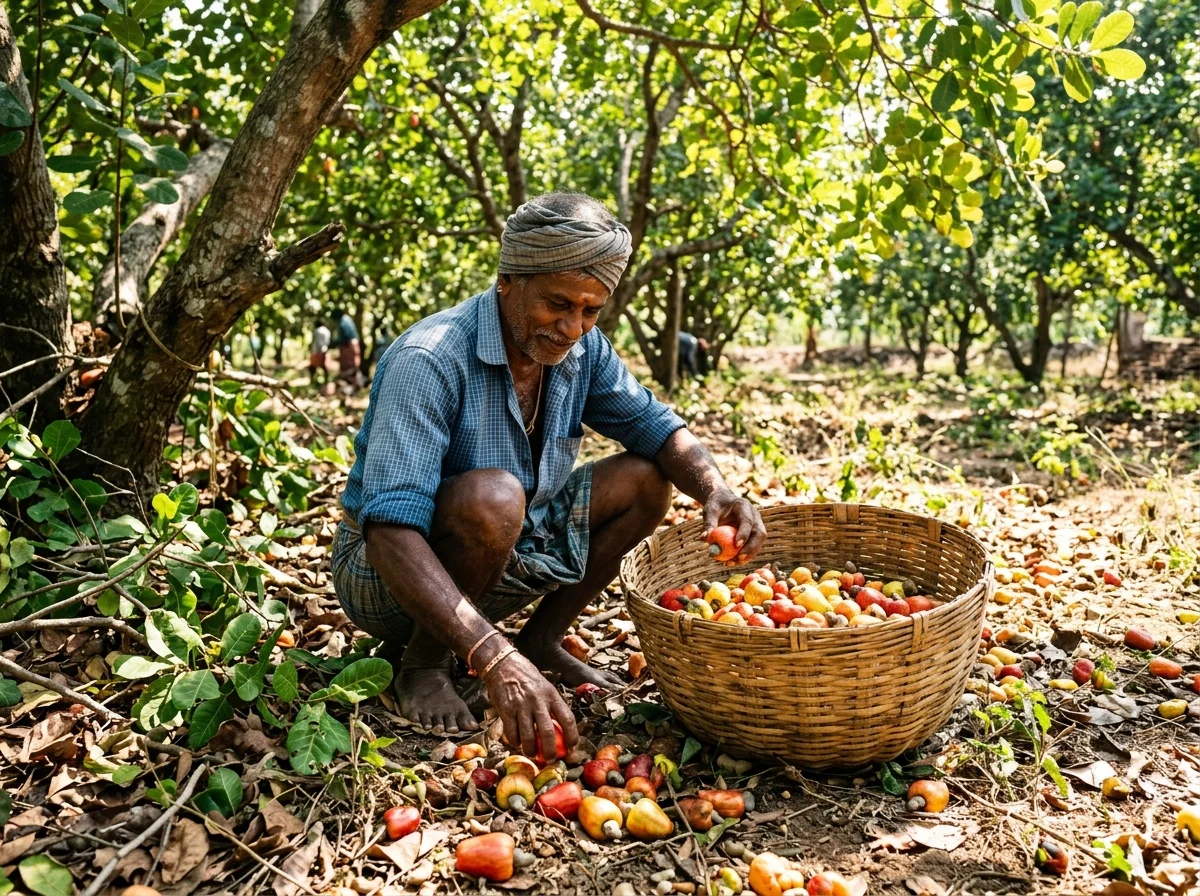
Ripe fruits drop naturally to the orchard floor. Workers hand-gather fallen apples and twist off the raw nut in shell on-site before insects or rot set in.
 AI Generated
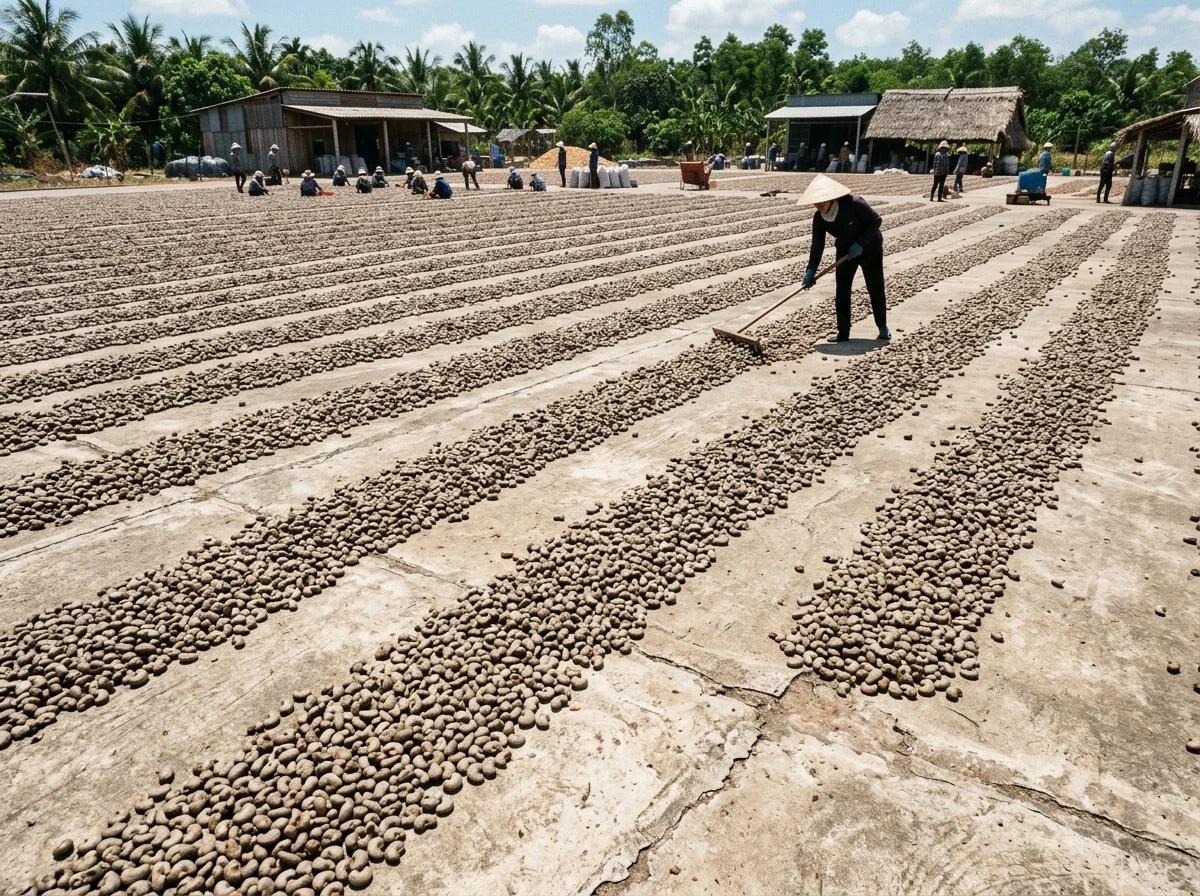
Freshly harvested raw nuts are spread across concrete open-air drying yards for 2–3 days, bringing moisture down to ~8% for stable year-round storage.
 AI Generated
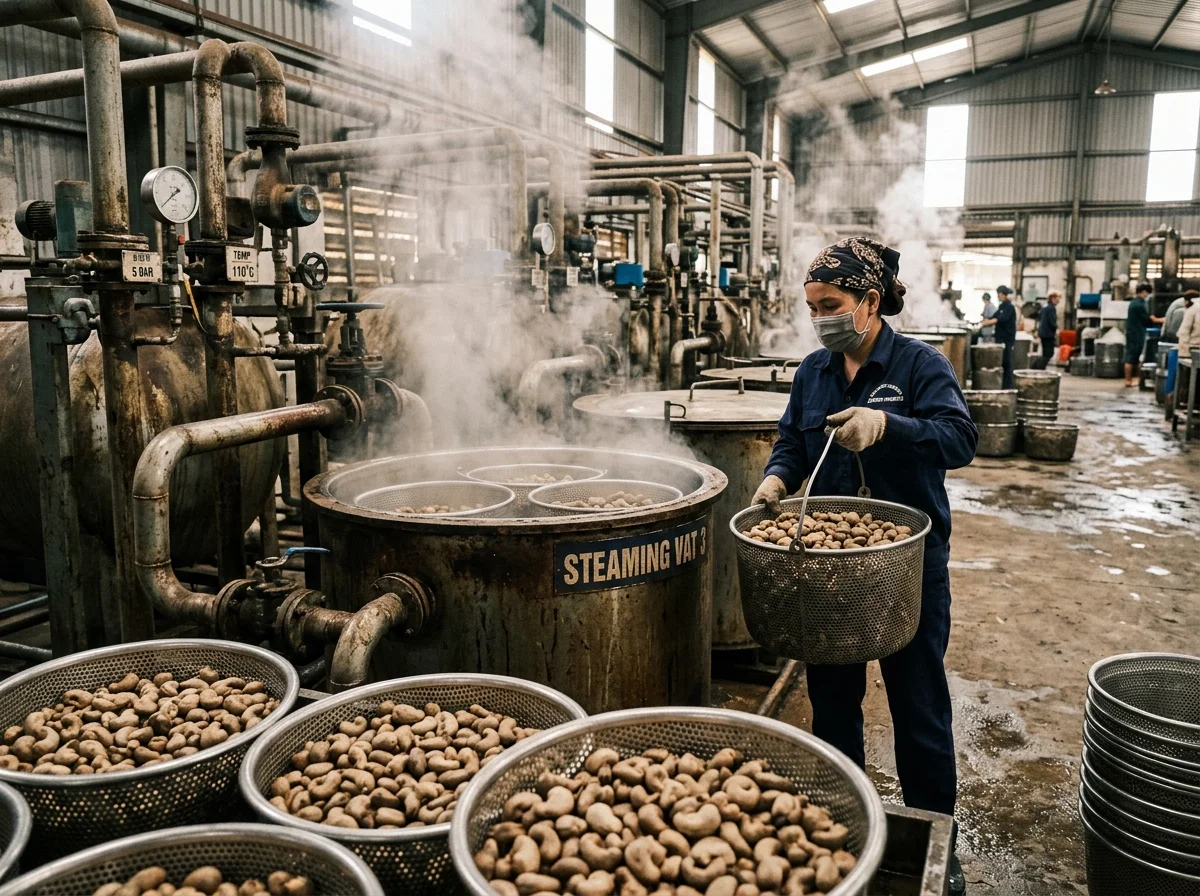
Before cracking, raw nuts are treated in high-pressure steam boilers. This softens the leathery outer shell and loosens the inner edible kernel from the shell wall.
 AI Generated
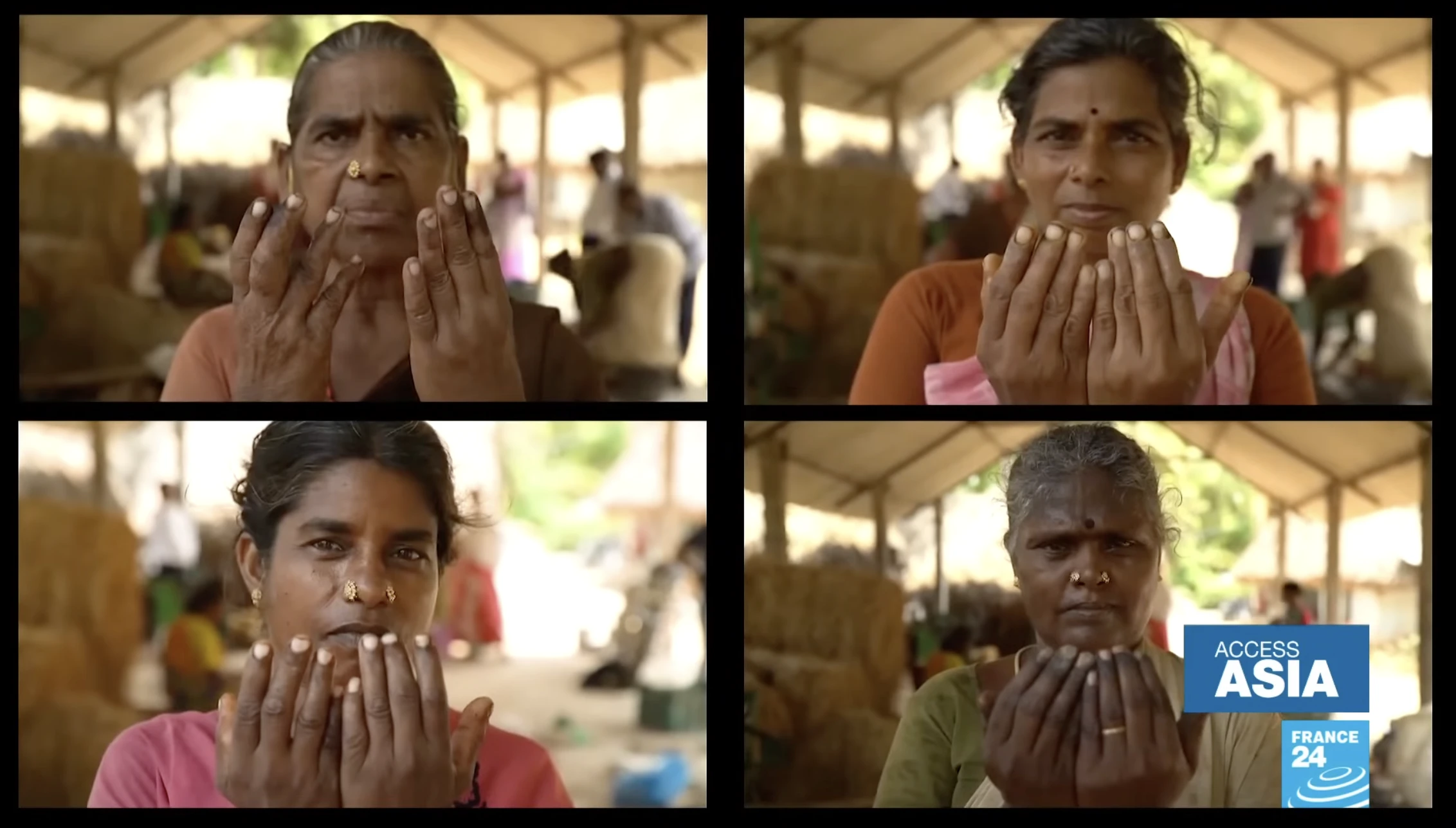
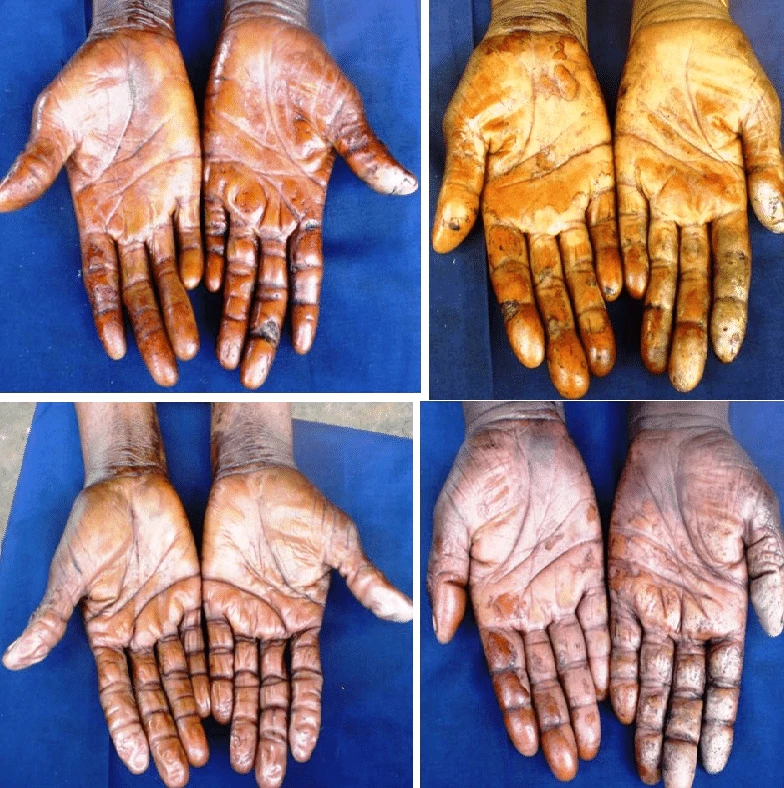
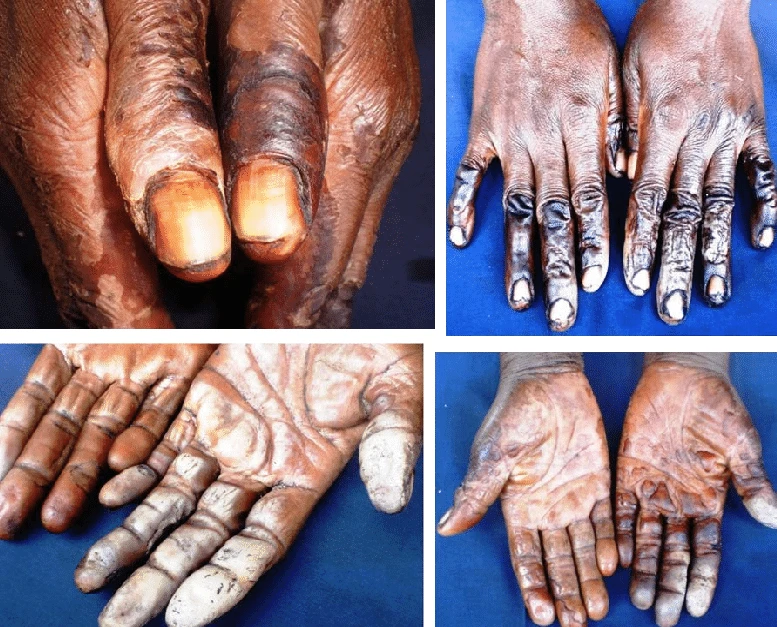
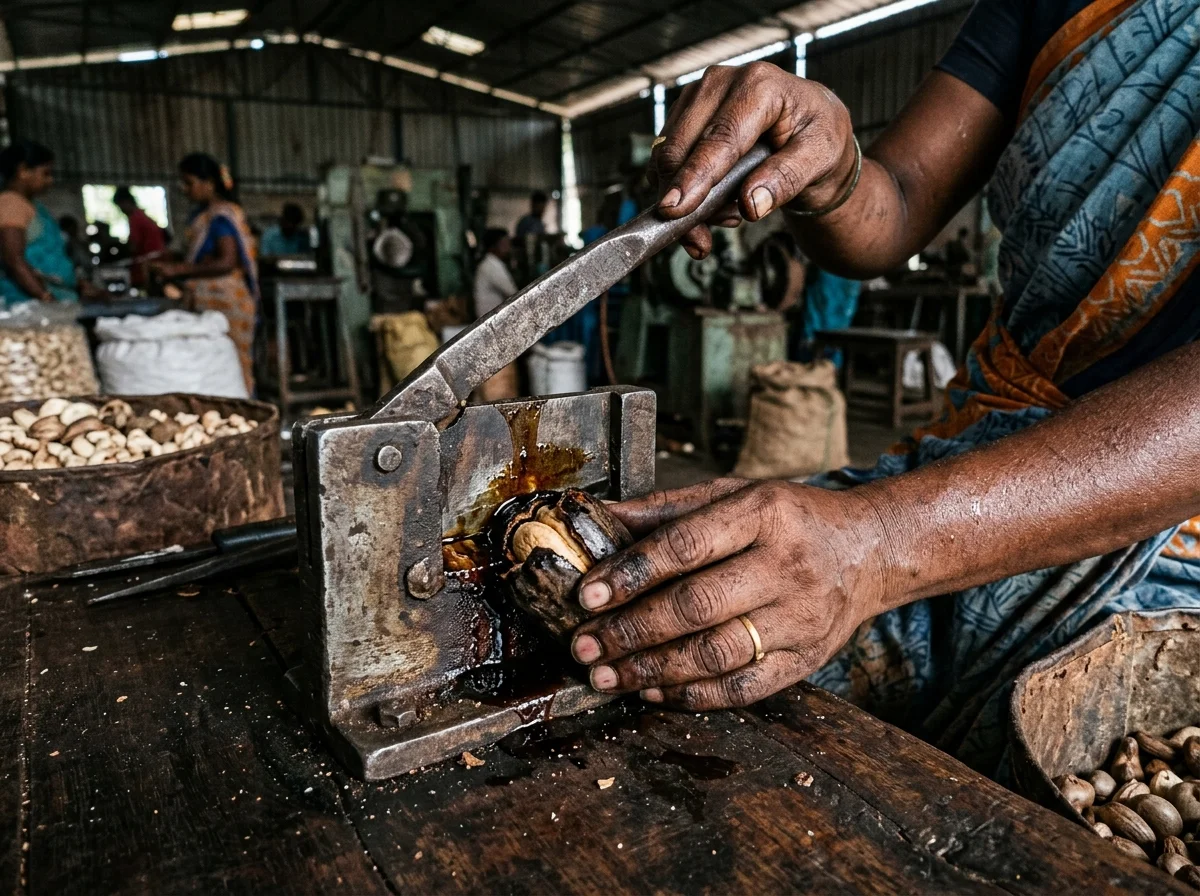
Workers crack the outer shell by hand. Rupturing the shell releases corrosive Cashew Nut Shell Liquid (CNSL), resulting in painful dermatitis and permanent chemical scarring.
 AI Generated
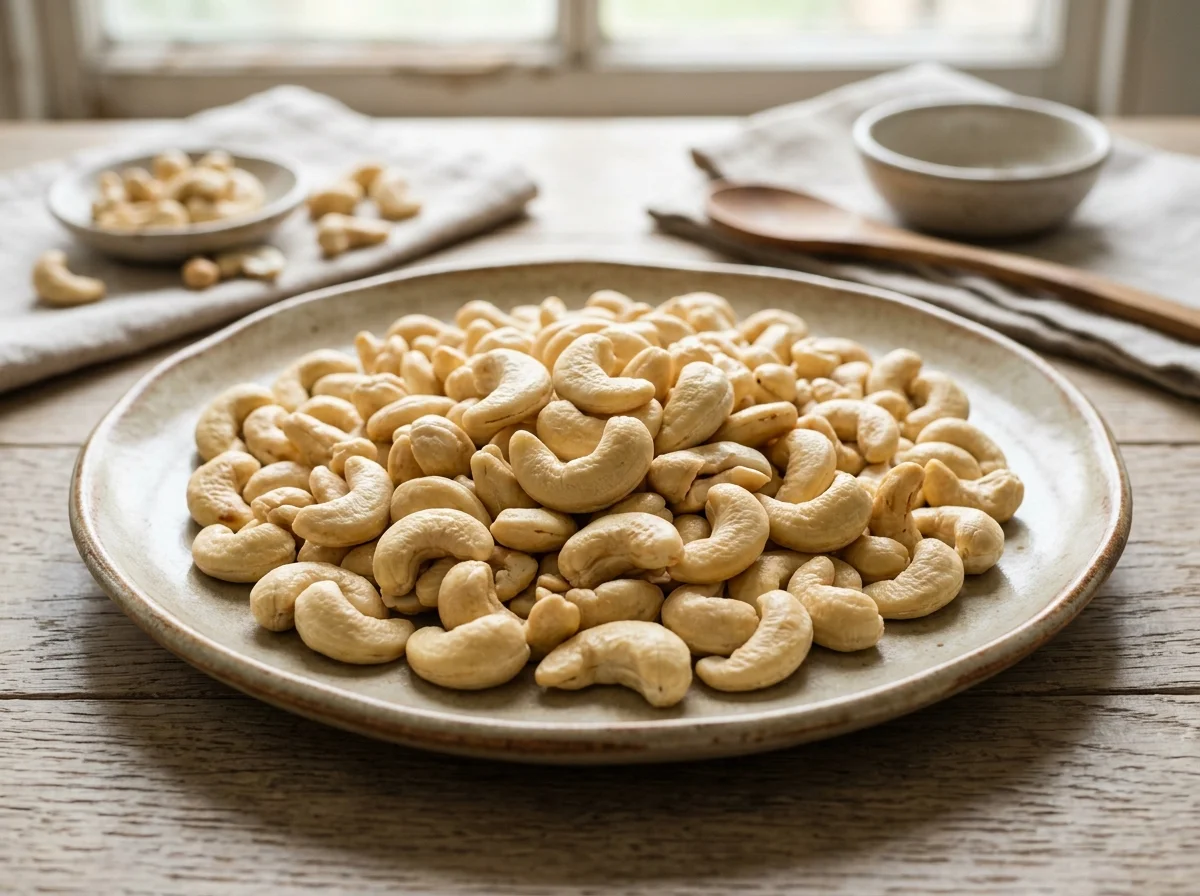
Intact whole white kernels fetch the highest export premium; broken pieces lose up to 50% value. This piece-rate pressure pushes workers to avoid gloves for speed.
Existing automated machinery operates at only ~70% accuracy, making manual intervention essential for quality control and kernel extraction.
Due to exposure to Cashew Nutshell Liquid (CNSL), workers often resort to using ash on their fingers as a protective measure, highlighting the lack of effective and accessible safety solutions.
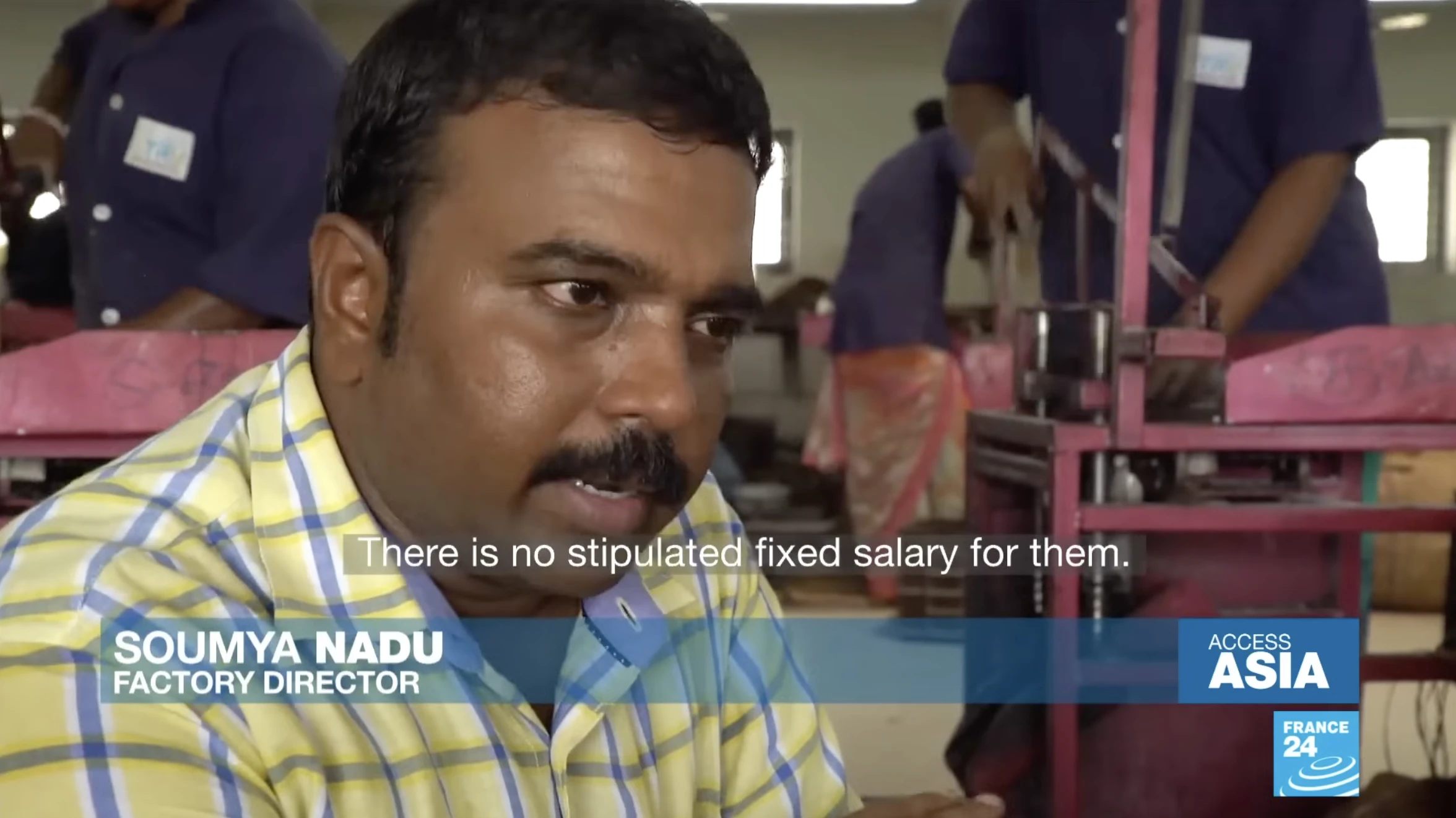
Workers are compensated based on the weight of processed nuts rather than time, incentivising speed and discouraging the use of protective gear that might reduce efficiency.
Young workers are leaving for bigger cities. Automation became survival, not a choice.
Machines are fast but blunt: 30% of cashews break. Hands were slow but careful.
Whole cashews sell at a premium, so breakage is a hidden tax.
Older workers find complex machines intimidating.
Scooping and hand-cutting are the riskiest jobs. Burns and cuts are accepted as part of the work.
Long hours of seated scooping and peeling strain the neck, shoulders and back.
Some steps are automated, but most still depend on hands.
Workers treat pain and burns with painkillers, sprays and oil.
They pick tools that are easy over fast, if fast means more effort.
Every tool belongs to the factory, not the worker.
The blade is the part workers fear most.
Cashews sell fresh (geela kaju) or dried, for different buyers.
Stored nuts keep factories working all year, beyond the harvest.
Flowers in late Jan, falls by mid-March, then sun-dried and sent for processing.
Five tools already doing this work, from a pair of shears to a motorised line. Everything that follows is measured against them.
Bench-mounted. One nut at a time.
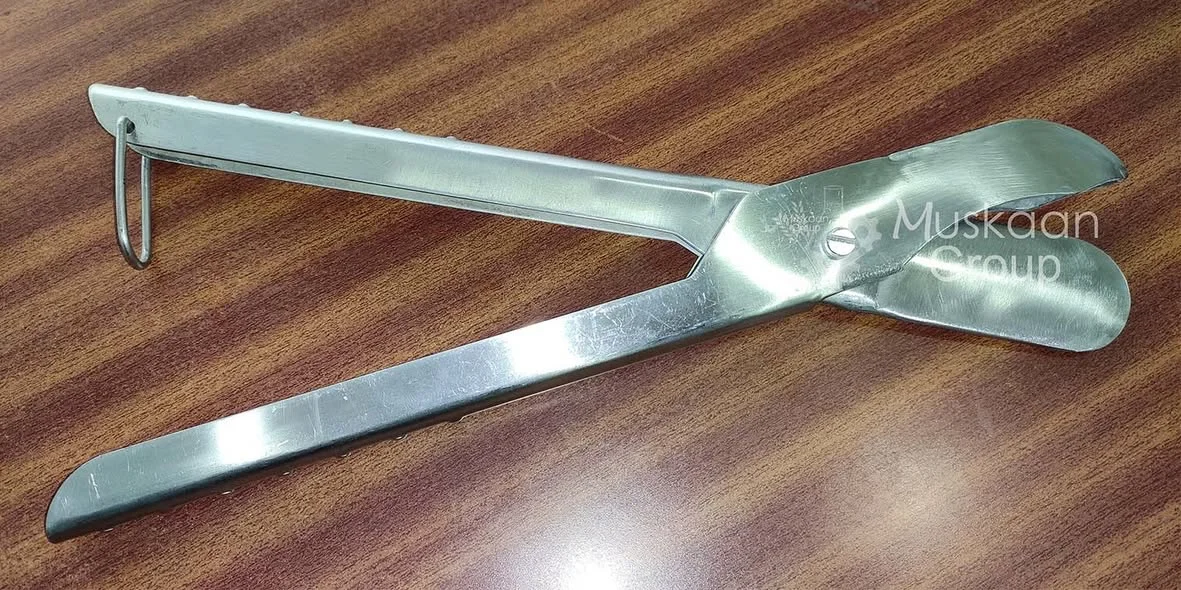
Hand shears. Cheapest tool on the floor.
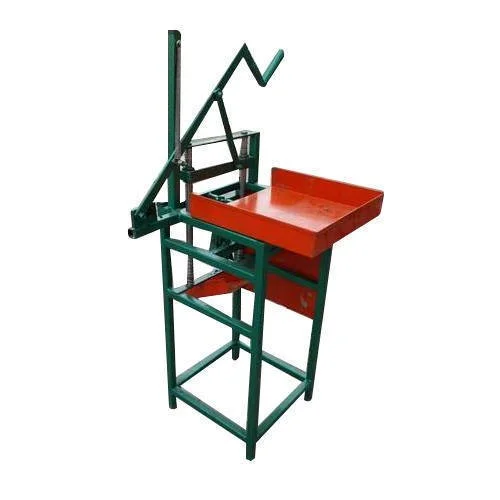
Standing frame, full-length lever arm.
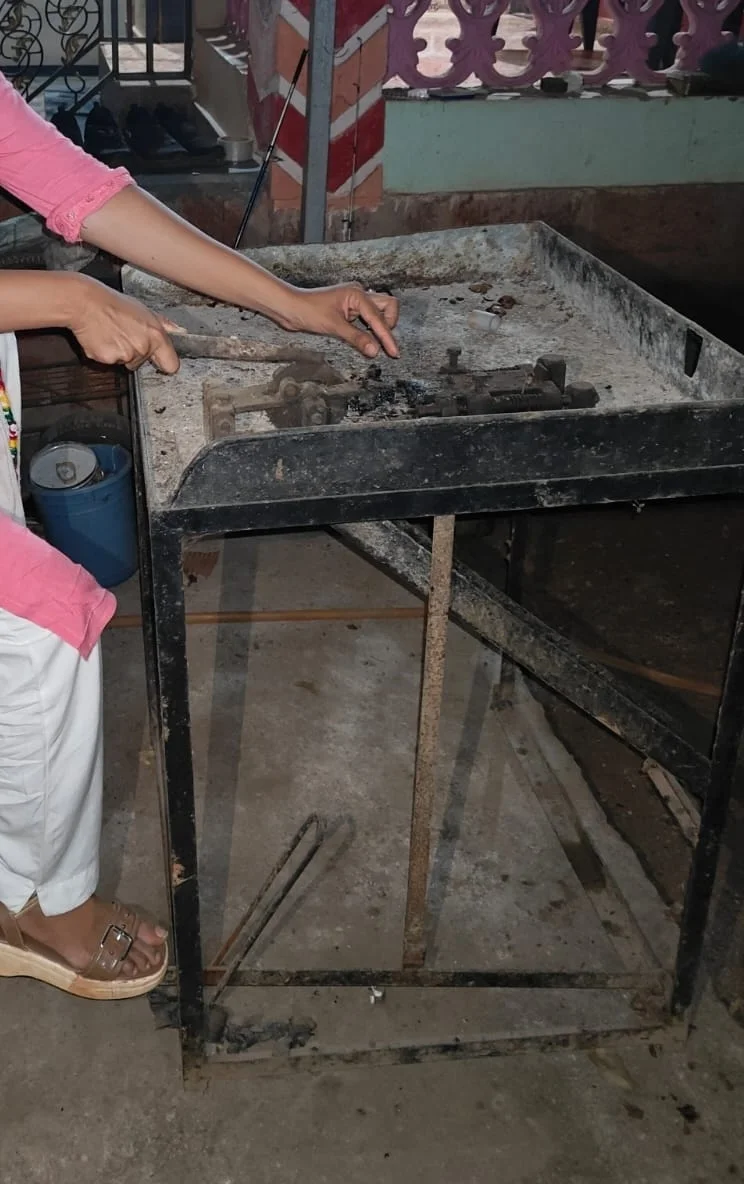
Foot-powered. Both hands stay free.
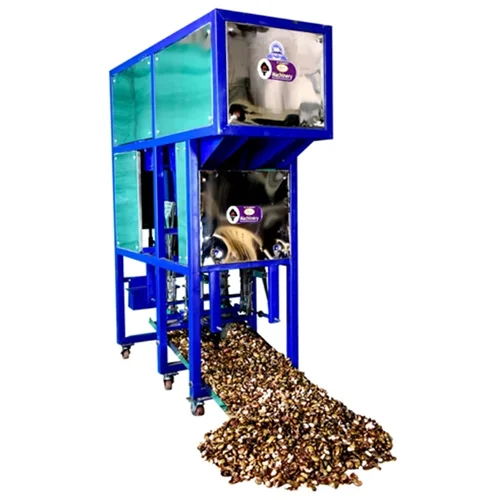
Motorised, continuous-feed, high volume.
We used RULA (Rapid Upper Limb Assessment), REBA (Rapid Entire Body Assessment), QEC (Quick Exposure Check) and Strain Index (SI) assessments to evaluate the physical strain and ergonomic risks faced by workers during their tasks.

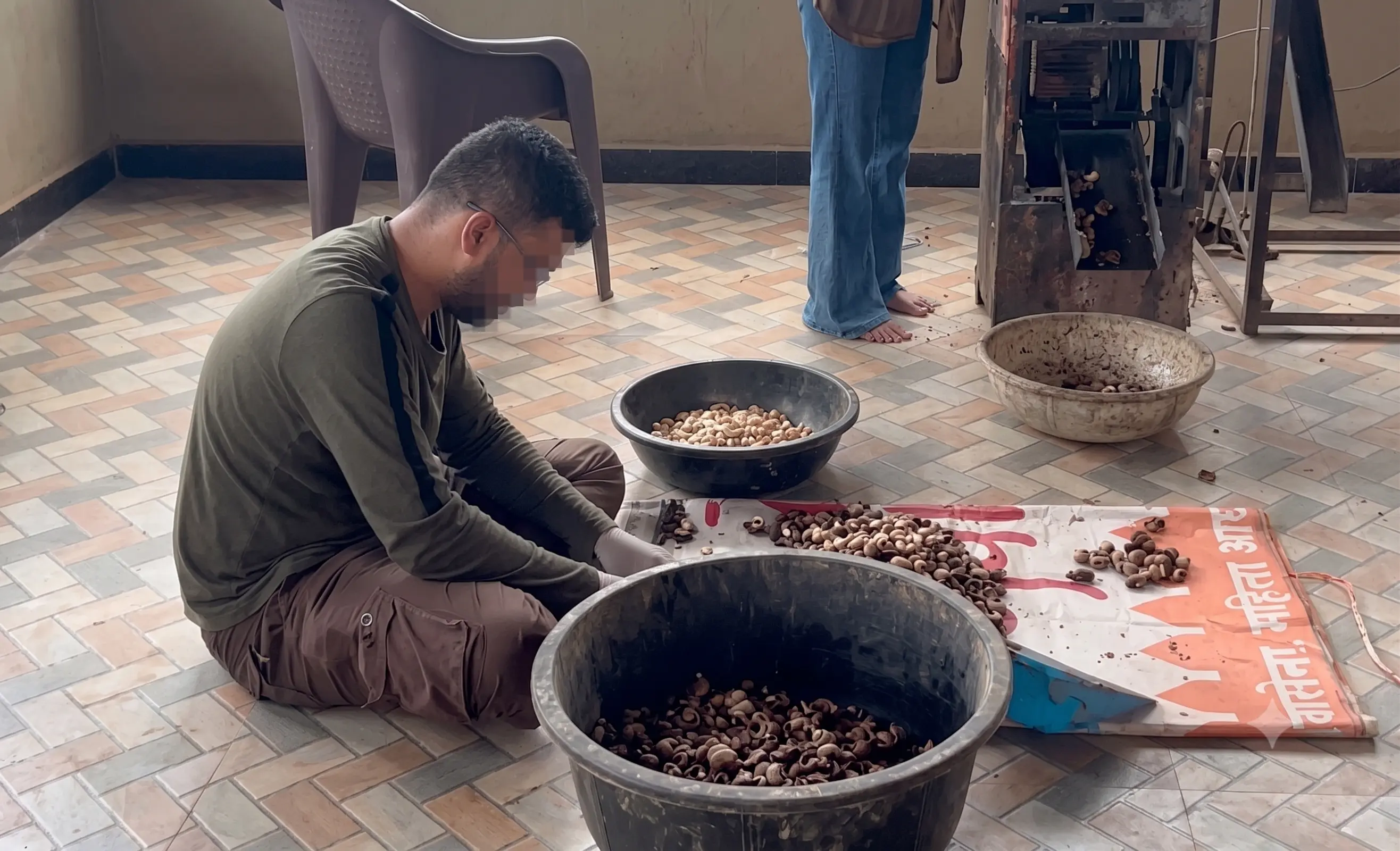
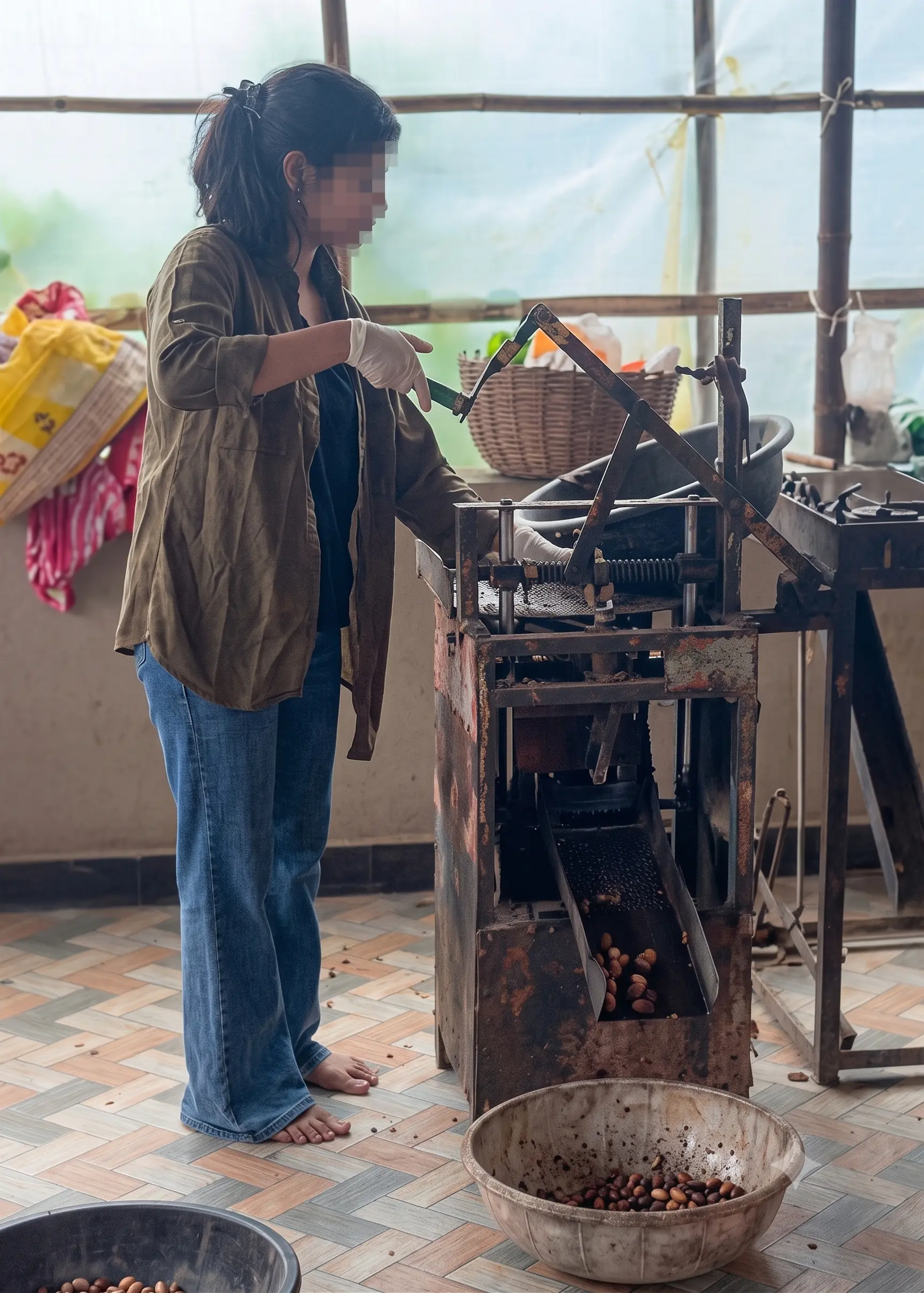
The RULA scores for hand-cutting and scooping tasks showed a moderate-to-high risk, the REBA score was 10 (very high risk), the SI scores were above 10 (hazardous risk for upper-limb disorders) and QEC scores indicated high exposure which can lead to injuries.
According to our calculations
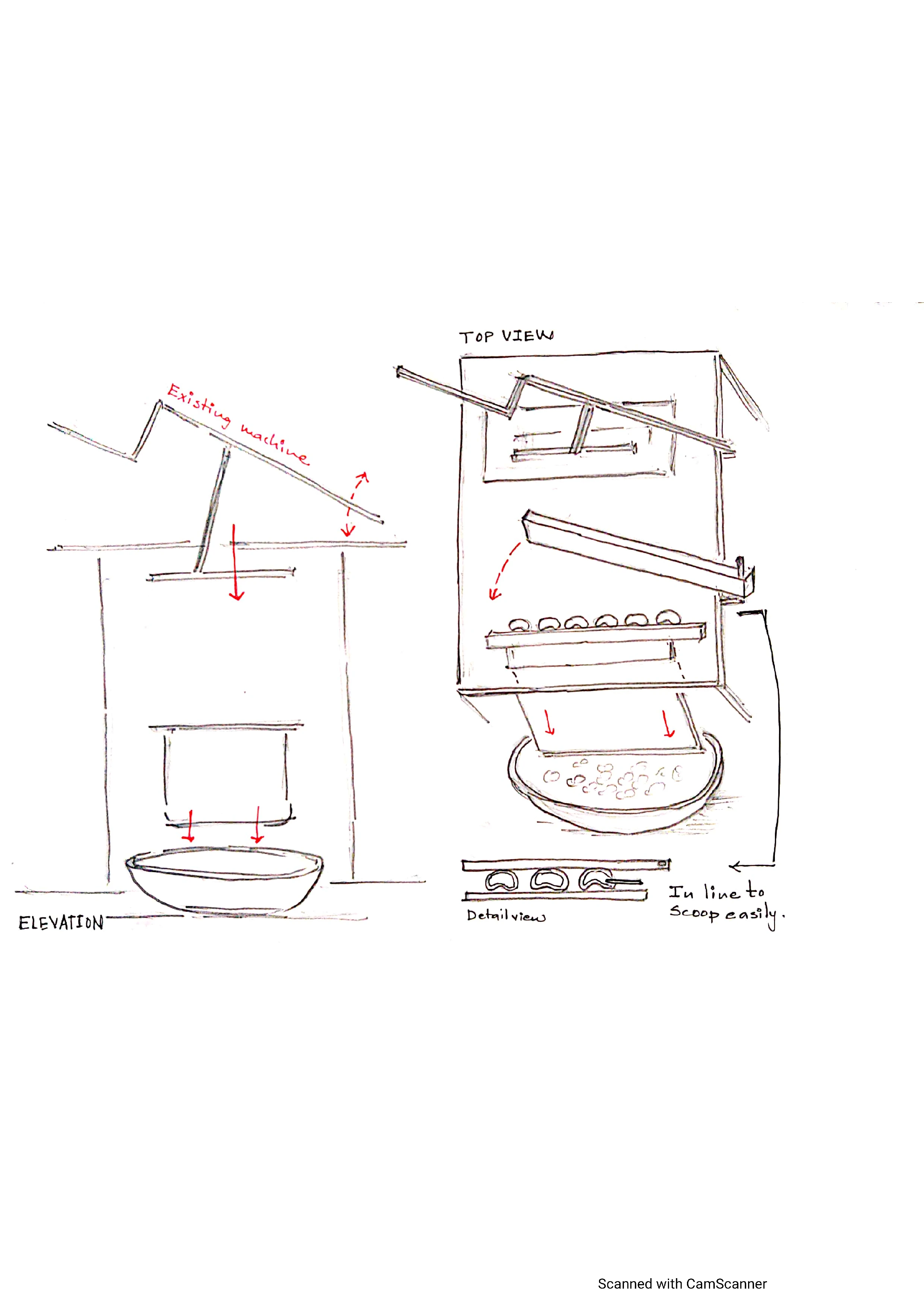
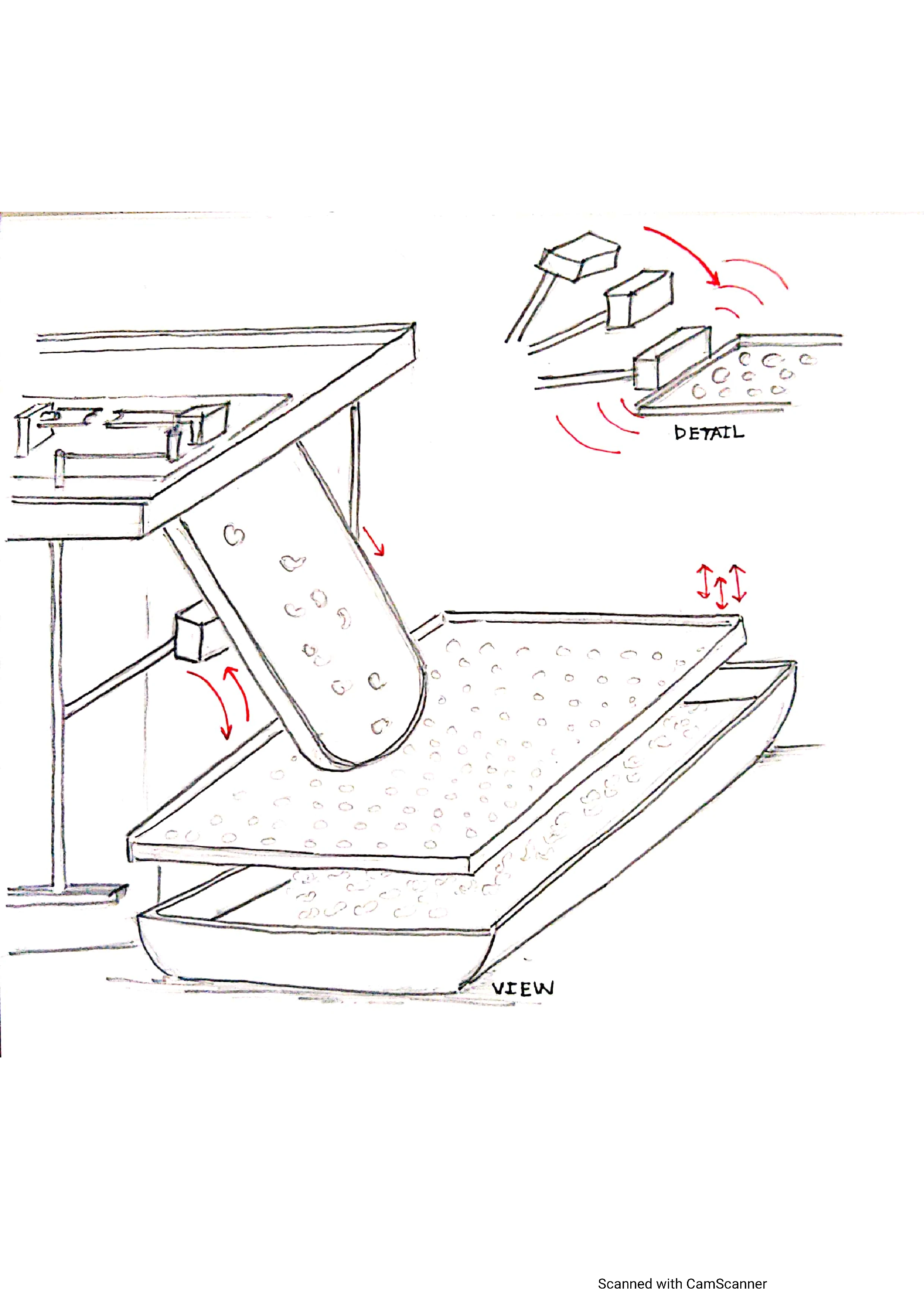
We built a 1:3 model of the final concept.
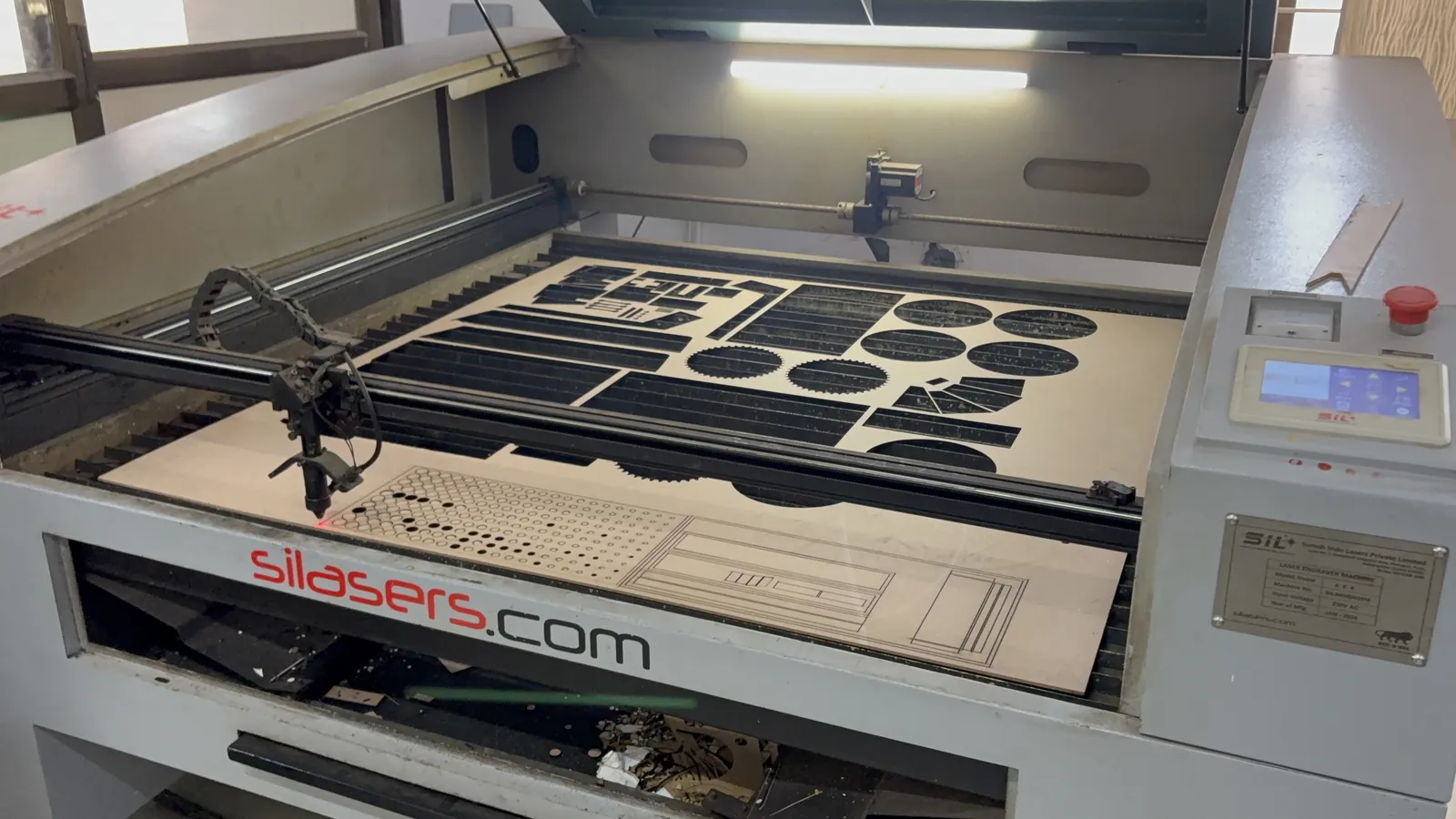
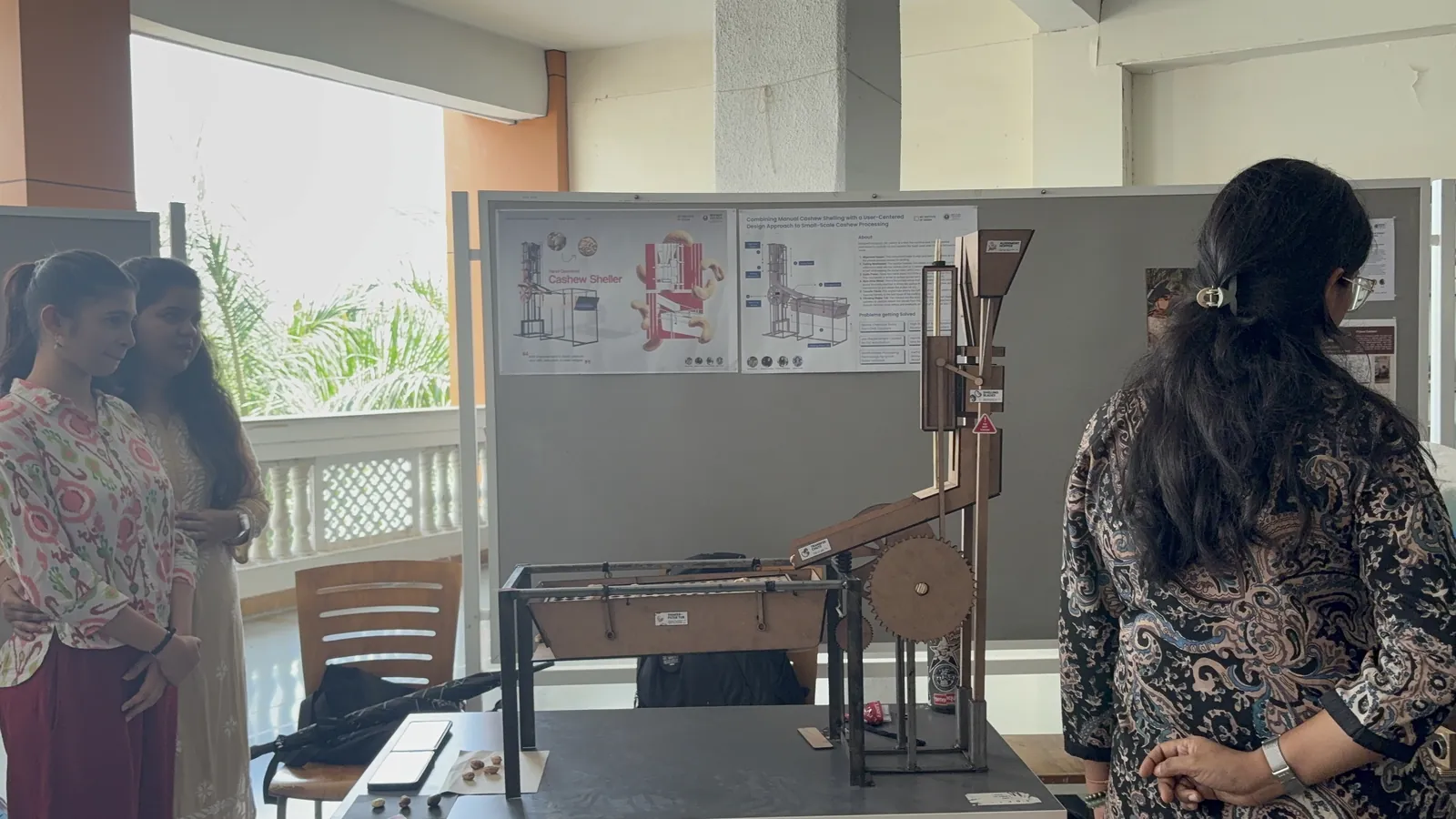
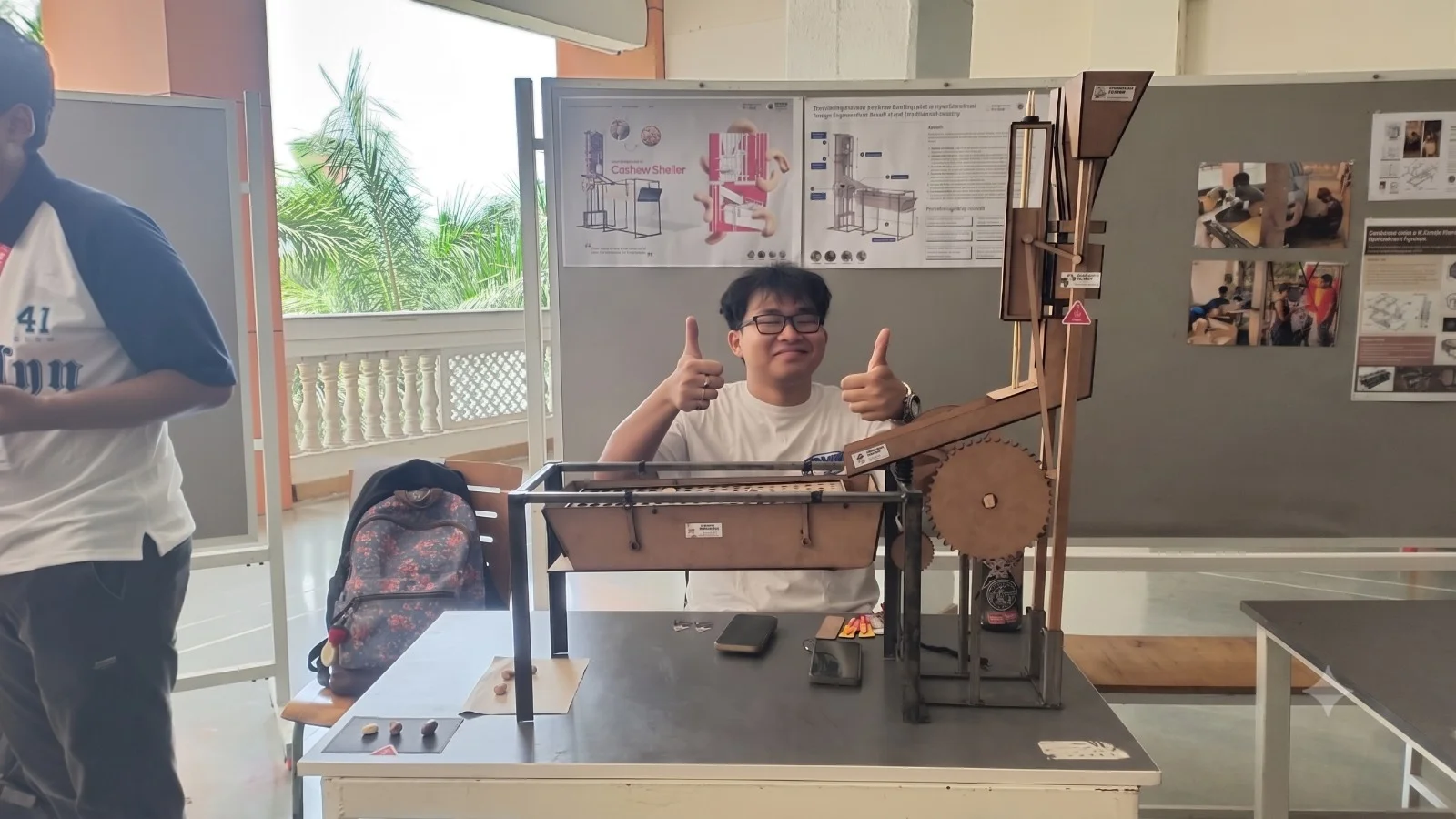
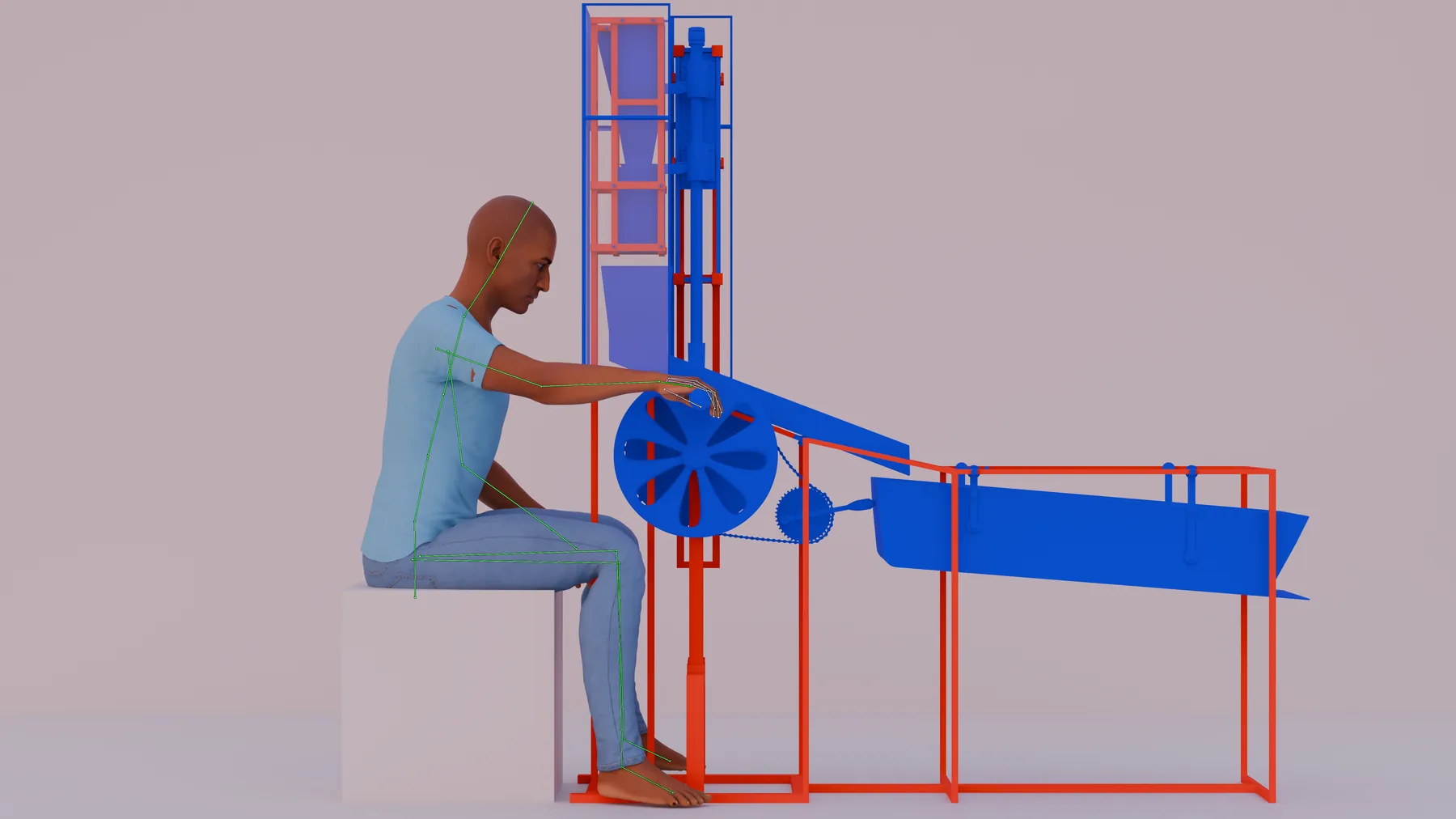
The final mechanism brings deshelling and scooping together into a single, manually operated tool eliminating repeated hand transfers, shielding workers from CNSL contact, and optimising mechanical leverage without requiring electricity.
A hand-turned drive wheel and pulley merge cutting and scooping into one continuous motion, replacing the hunched pinch-grip with a rotational movement and removing all hand contact with the shelling process. Posture assessment of the proposed design predicts a 60% lower overall REBA score and roughly 90% less wrist strain on both hands. These figures are calculated from the design's working posture, not yet measured with workers. No CNSL exposure, no electricity and no replacement of manual labour — which is what makes it viable on an existing factory floor.